 My Patrix site
The Inevitability of Combining the Digital and Physical Worlds
Seeing is believing
AI is attracting all the attention but one should be careful because if there is one thing about technology is that timing is everything and when attention is concentrated it signals that time is distorted.
In a recent interview Apple management was asked about AI, which is perceived as an area where Apple has been struggling. Greg Joswiak replied:
We’ve been doing things with intelligence for many years, right? And gen AI allows us an opportunity to do that even more. So I’m excited about that, but boy, this is not a sprint. This is a marathon, right? We’re going to be doing stuff with intelligence for decades, not months or years.
He also declined to comment on smart glasses, but said we’re in the “early innings of spatial computing,” while Ternus said that combining the digital and physical world is an “inevitability.” The two were tight-lipped about any upcoming Apple products, but Joswiak said Apple is “working on some pretty cool stuff.”
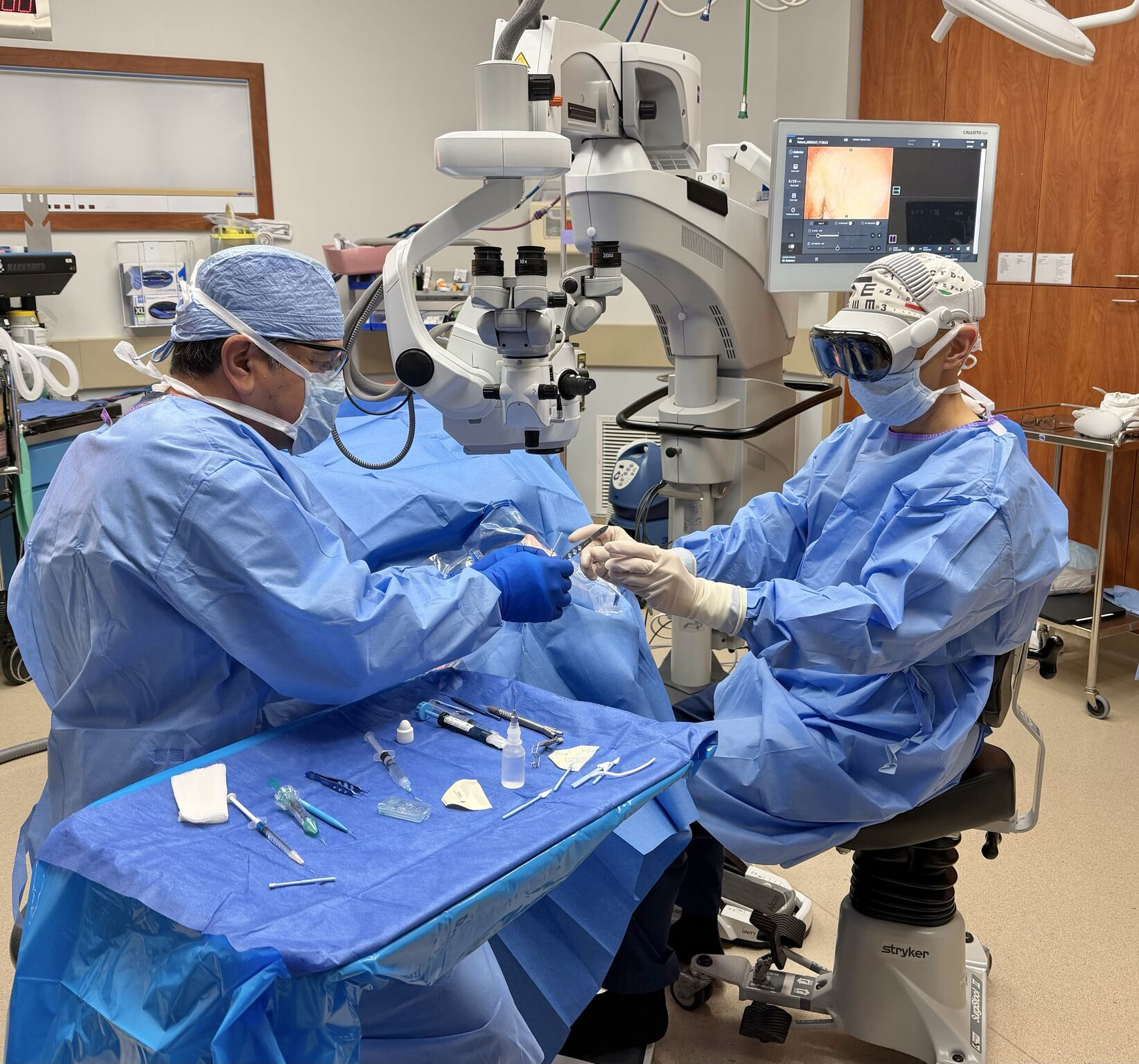
In San Diego, Dr. Tommy Korn has been performing surgery with the Apple Vision Pro.
We’re studying how spatial visualization may redefine microsurgery.
• IRB-approved1
• One of the first of its kind in microscopic eye surgery
• Safety & feasibility study
Technology used:
• Apple Vision Pro – 2nd generation M5
• ZEISS Medical Technology Artevo 850 3D Digital Microscope
• ClearSphere spatial app from ClearSurgery
Source: LinkedIn
The idea of adding a layer of information or enhancing vision through a wearable computer being used to repair the vision of damaged eyes, I’d say that’s pretty cool stuff.
To oversimplify, the Apple Vision Pro is being used to substitute looking directly through microscope eyepieces, freeing the surgeon from neck and eye strain and allowing additional information to be shown without averting their gaze from the procedure. This improves outcomes and reduces fatigue allowing more procedures to be performed by the same surgeon or allowing more surgeries to be performed by more individuals with fewer obstacles to training.
Spatial computing (SC) is also not a sprint. Joz said it’s a product that has been brought from the future into the present and, as I use it, I feel that is indeed the case. And like AI, there are benefits being measured today. But what strikes me is the contrast in attention.
Far more attention and capital is being applied to AI vs. SC but both are inevitable. The contrast might have something to do with psychology or attention markets but it shows that opportunities are not secrets. They are just unnoticed.
Comments