 My Patrix site
Memory is a Commodity
“I’ve never seen a shortage without a subsequent glut, but I’ve seen gluts never followed by a shortage.” -Nassim Taleb
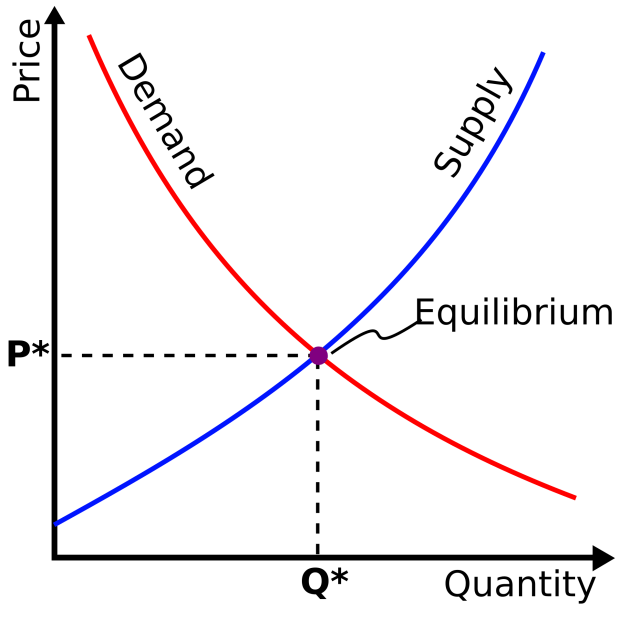
A commodity is a product or service which does not increase in price if its performance increases.
In a typical commodity exchange (coffee, pork bellies, iron ore, oil, etc) an offer of a “better” batch would not result in a higher price. The market treats all instances as equivalent with no regard to who produced them or how they were produced.
That does not mean that commodities prices cannot rise. Although not determined by quality or performance or sourcing, commodities respond to supply/demand imbalances. These are unpredictable and are affected by externalities and multitudes of factors.
Because performance is not differentiable, businesses trading in commodities are not responsive to innovation in the product. They may benefit from production and distribution innovation however. This is why scale, consolidation, regulation and legislative action are primary drivers of value.
That is also why Apple doesn’t design or build memory. Pricing will oscillate but, as a producer, Apple would be locked into their own cost structure and wouldn’t be able to negotiate with multiple vendors, nor have flexible responses to surges or drops in demand.
As a commodity, memory chips from any manufacturer are effectively interchangeable and pricing is not determined by producer. Therefore, the only way memory makers can make money is by lowering their own cost, which they do by increasing density (bits per wafer.)
The design isn’t the hard part or the limiting function for density and thus cost for DRAM or NAND chips. As Joe Lion pointed out in a Mastodon thread:
By far, the single most important thing for increasing bits per wafer is shrinking the process nodes which decreases cell size, where a DRAM cell is “1 transistor, 1 capacitor.”
The design of the DRAM cell is the same as laid out in Robert Dennard’s original DRAM patent from 1968. The design of the interface and periphery circuits, while important for performance, are nearly insignificant for decreasing overall die-size, which is, again, the critical factor in $ per bit.
Lion continues,
This is different than CPU/GPU/logic chips, which are not a commodity, and therefore pricing can be set by the manufacturer based on whatever the manufacturing cost happens to be, plus their desired gross margin.
To put another way, TSMC and Intel have never sold a CPU chip for a loss because they set the pricing themselves, and they will never price their own product below their own manufacturing cost, whereas memory makers frequently go through years-long cycles of selling chips for a loss because memory prices are set by global supply and demand.
Into this emerged a political dimension. The Chinese government declared memory as a strategic commodity and spent hundreds of billions of dollars developing its own memory suppliers over more than a decade. These investments take many years to bear fruit. A new fab would take five years before the first wafer, 10 years before high volume yield, and 15 years or more before cost competitiveness with incumbent DRAM vendors. It may not ever become profitable. China is 12 years in and its state-sponsored memory industry may only be reaching profitability due to the market imbalance just experienced.
The rest of this post is for Asymco members. Continue reading on asymco.com.
Comments