 My Patrix site
Apple’s Unpretentious Moonshot
An Office Hours question, September 11, 2026.
Q: Aside from the iPhone Pro & Duo, what was significant with Apple’s latest?
We’ve had a lot of betas since WWDC, leading to OS 27. That’ll be big. People overall have been giving good reviews. It is much better than many people expected.
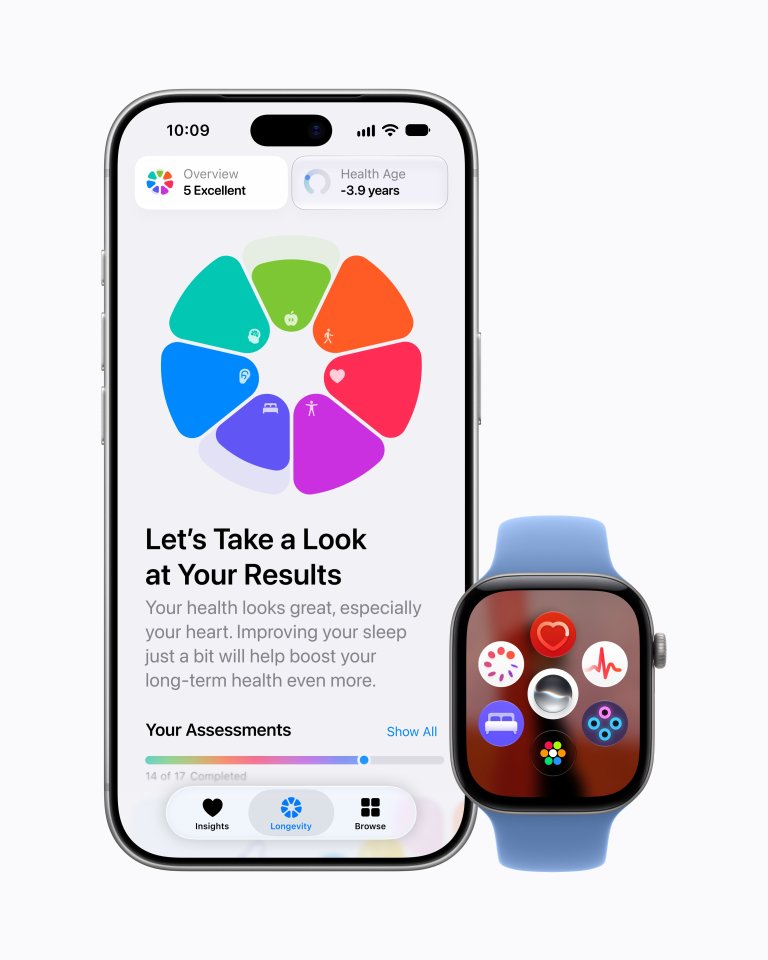
But the big news of the event, to me, was the Watch, health in general, and how it’s going to end up leveraging AI. That is one of those things that keeps compounding.
The story of health and Apple continues to be a drumroll that gets bigger and louder, and it’s still getting ignored. It’s getting ignored the way services were ignored ten years ago, when Wall Street didn’t think it was worth paying attention to. It was a hobby. Even the most famous followers of Apple would have said Apple’s no good at services, that it was Google’s game, that Apple was too slow, bad at building data centers. No one’s saying that now.
Tim has a lot of quotes, but the one I like most is where he said that Apple may be known most for its contribution to health. That’s a bold claim, and it flew over people’s heads. But think about it: would I rather have a device that keeps me healthy? Not just fixes me, but keeps me healthy. That’s health maintenance. As a coach, it does all the things that lead to a good lifestyle, and maybe not just health but happiness. What would be the value of that machine versus one that was an AI? We focus entirely on AI being some kind of magic, whereas health is another kind of magic that doesn’t seem to be considered very valuable. If I were to do the math, the health industry, including wellness, exercise, apparel and diet, is far bigger than knowledge-based assistance.
Now, I’m not discounting AI at all. But people are more likely to say: we want to preserve and be healthy. There are big problems with that, in motivation and so on. We like GLP-1s because we like pills. Simple answers, quick, but expensive. Doctors like them because they’re easy to prescribe. You don’t have to rely on the habits or the mind of the patient.
But what if you could change people’s behaviors? What if you had a machine that was effective in guidance, without the side effects?
The case in point is exercise. If exercise were a pill, it would be a miracle pill. Every doctor would prescribe it. So the question to ask is: how do I make exercise into a pill?
Making it into something so reliably delivered and so easily administered: whoever does this will reap enormous rewards. That’s where I think Apple is thinking they’ll be in twenty years.
We’re seeing continuous progress, always flying under the radar, everyone glazing over: more sensors under the Watch, what’s the big deal. But that Watch is collecting so much data. I’m shocked, scrolling through my Health app, at how many different things it’s able to infer. It’s now tracking your heart rate at five-second increments, as close to real time as possible. What about blood pressure? Glucose? Your hearing, your eyesight? And then the biggest things of all: exercise and diet. Apple will eventually conquer these domains, and then it’ll be a thing you have that’s as important as an AI assistant. How about my health coach?
They just did an acquisition of a company using electromagnetic fields for what I first read as intent sensing but now think is biosensing: possibly determining blood sugar or other metrics of your health. It’s not going to be neural implants, but they’re going to get all this data. This is a moonshot. This is the human moonshot. It’s solving something bigger than AI, in my opinion.
One of the questions asked in Asymco Office Hours. The full recording and transcript are available to Asymco One subscribers.
Comments